

In today's era of increasingly slim and compact electronic devices, Flexible Printed Circuit (FPC) design has become a critical factor determining product reliability and performance.
In the field of PCB design, FPC design is a high-precision art that directly impacts product reliability, lifespan, and market competitiveness. As electronic products continue to trend toward lighter, thinner, and smaller form factors, the importance of FPC design has become increasingly prominent.
This article delves into key FPC design techniques—including curved traces, protective copper addition, hatched copper application, and pad design standards—providing data-supported insights based on IPC standards and practical guidelines.
The Importance and Challenges of FPC Design
Flexible Printed Circuits (FPCs) are widely used in mobile devices, wearable technology, and high-end consumer electronics due to their excellent bending characteristics. Unlike rigid PCBs, FPCs must maintain reliability under dynamic bending conditions, which presents unique design challenges.
Repeated bending can lead to trace fractures, particularly at inner corners, significantly reducing product lifespan. Research shows that FPCs designed with appropriate strategies can improve product life by more than 40%.
Optimization Strategies for Flexible PCB Design
-
Curved Traces: The Optimal Choice for High-Frequency Signals
For high-frequency signal routing, curved traces are significantly superior to 45-degree angled traces. Test data shows that curved traces exhibit an impedance variation rate of less than 2% (under 10GHz testing conditions), whereas 45-degree angled traces experience a 1.414x line width mutation at corners, resulting in impedance fluctuations of up to 8%.
In a 5G base station PCB design, using 45-degree traces worsened return loss by 3dB. After adopting a curved trace solution from the UG design department, the design fully met specifications. In terms of EMI radiation, curved traces reduce radiation intensity by 40% at 30GHz compared to 45-degree traces, due to electric field strength at sharp corners being 1.7 times that of curved traces.
Case Study: A millimeter-wave radar project failed FCC certification due to 45-degree traces but passed successfully after switching to curved traces. -
Adding Protective Copper: An Effective Measure Against TearingAdding protective copper at outer shape corners is a key technique for enhancing FPC lifespan. An effective method is to add curved protective copper at all inner corners of turning traces, with a distance of less than 0.2mm from the inner corner and a line width greater than 0.2mm.
This design adds anti-tear lines at vulnerable points of the FPC, effectively preventing breaks during bending. Implementing this technique significantly reduces failure rates caused by fractures during repeated bending, greatly improving product lifespan and market competitiveness.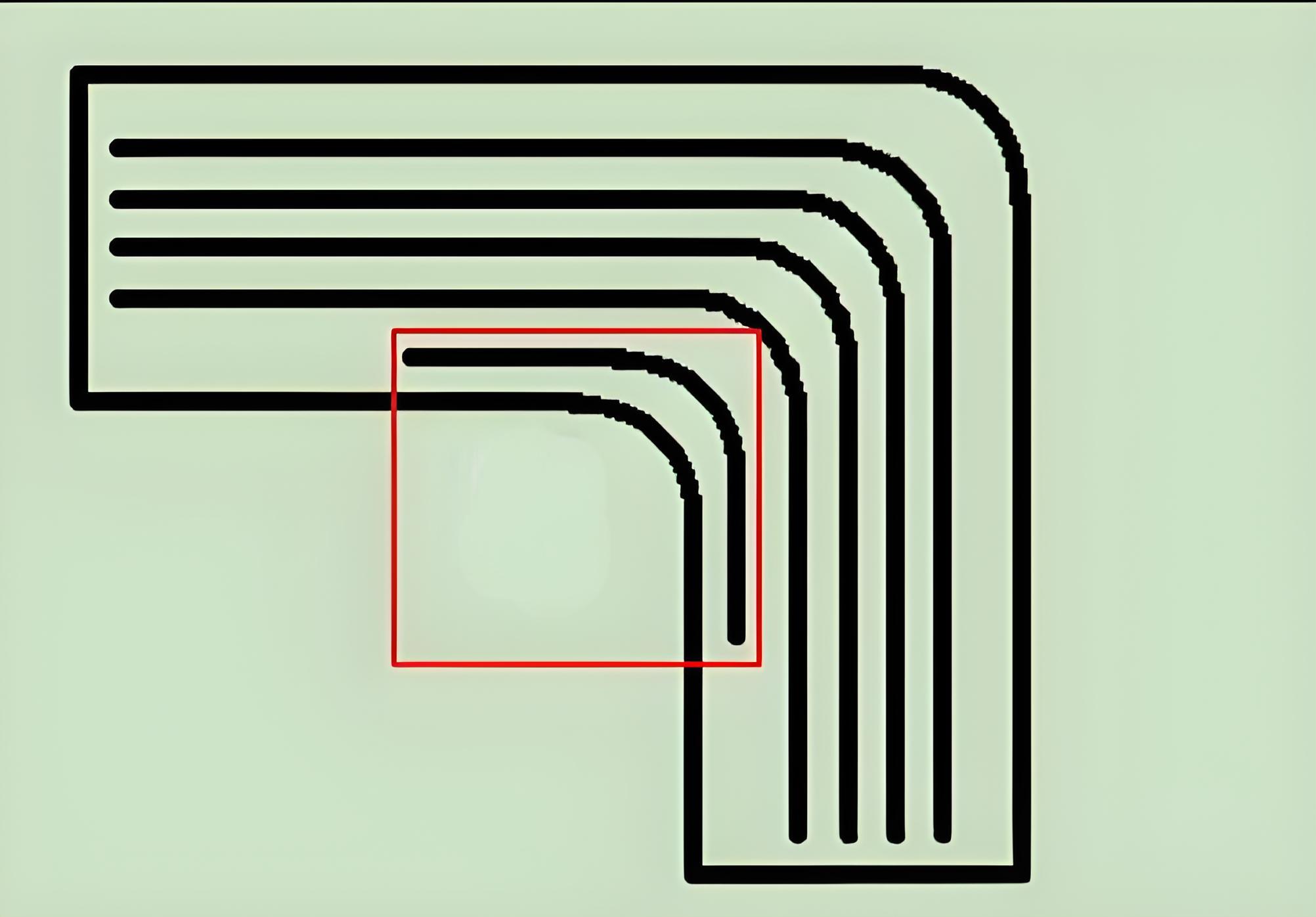
Copper Pour Design Choices: Advantages and Practices of Hatched Copper
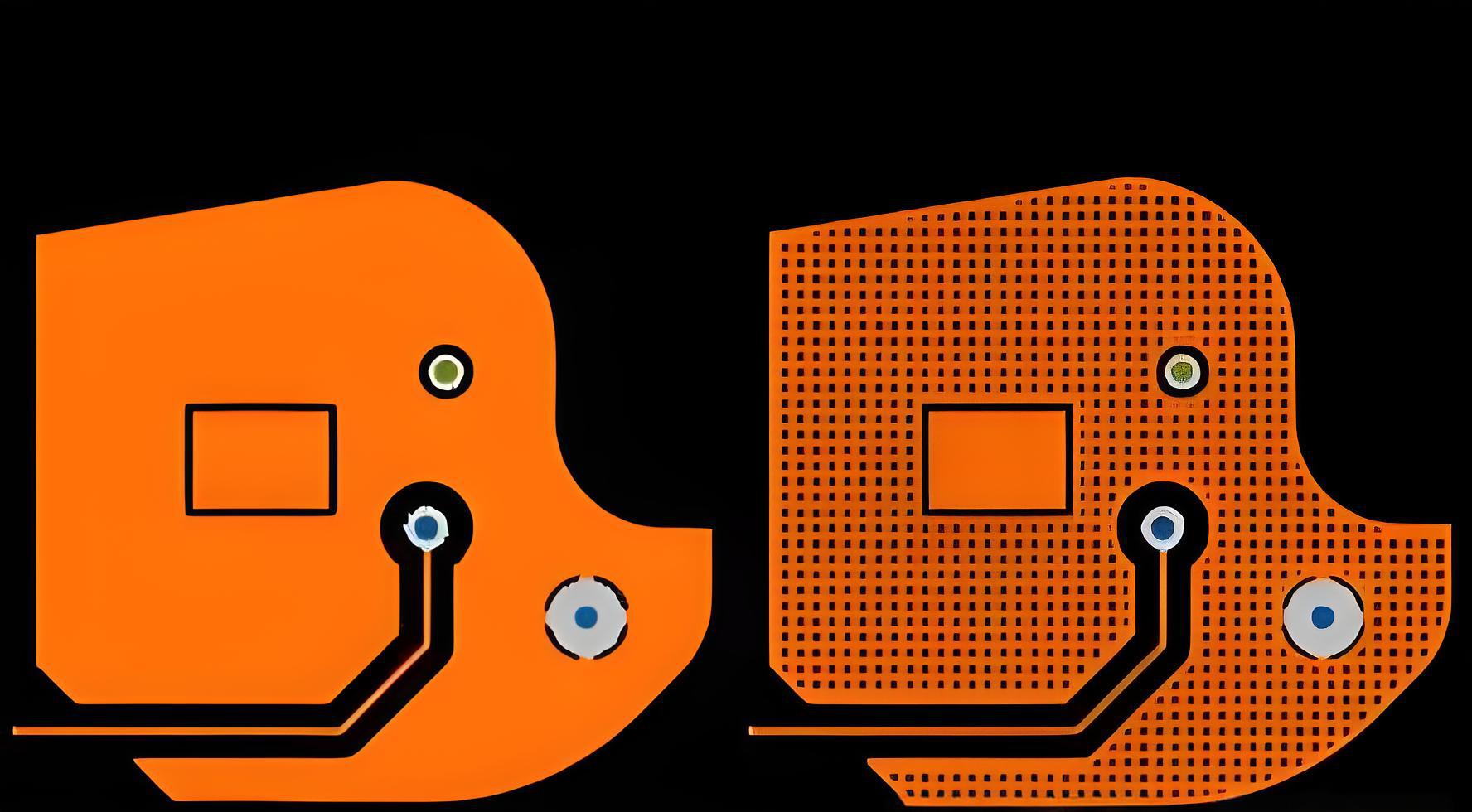
In FPC design, hatched copper offers higher reliability compared to solid copper. Solid copper and hatched copper differ significantly in electrical performance, thermal management, and processing technology.
Solid copper provides a continuous conductive layer with extremely low resistance and minimal voltage drop, excelling in high-current low-frequency applications while greatly enhancing electromagnetic compatibility. However, the continuous copper layer increases the risk of thermal expansion, potentially causing circuit board deformation.
Hatched copper, with its discontinuous copper layer, reduces thermal expansion effects by approximately 30%, offering clear advantages in thermal management and effectively minimizing FPC thermal deformation. Although hatched copper has higher resistance and voltage drop, in ultra-high frequency circuits, it reduces eddy current effects and may provide better shielding performance at specific frequencies.
Key Techniques in Pad Design and Coverlay Opening Optimization
The Optimal Relationship Between Pads and Coverlay
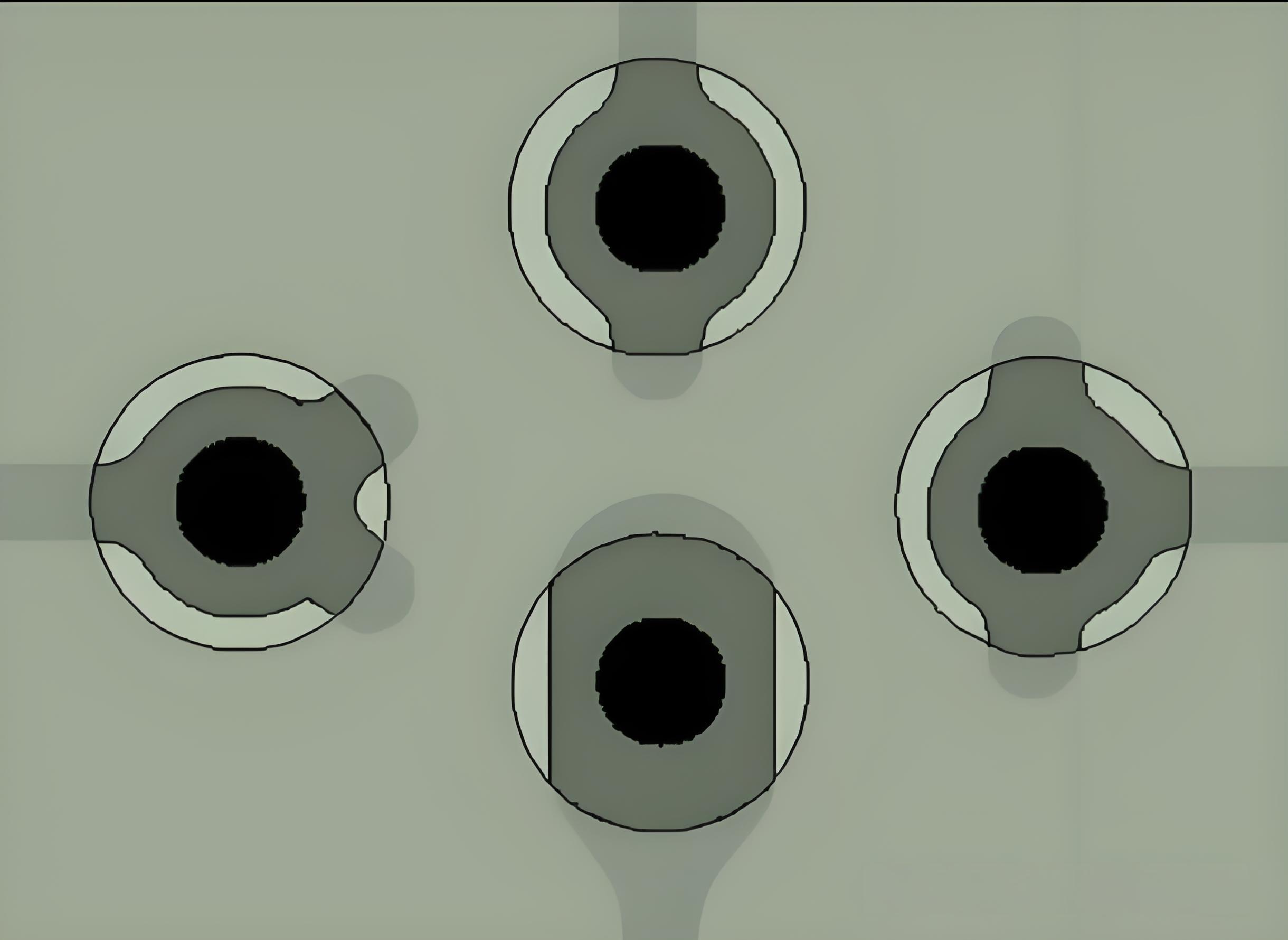
Pad design is another critical aspect of FPC reliability. Where space allows, the pad diameter should be larger than the coverlay (CVL) opening, allowing the coverlay to cover part of the pad (approximately 5mil) to enhance pad adhesion.
This design prevents pad lifting and fractures at the junction between traces and pads. For BGA pads, the pad diameter should be ≥0.25mm, and pressed pad designs should be used to improve adhesion.
Addressing Coverlay Adhesive Bleed
As FPC copper thickness increases (up to 8.5-10mil), the adhesive thickness of the coverlay also needs to increase accordingly (up to 5mil-7mil), which can result in significant adhesive bleed and reduce the solderable area of pads.
An effective solution is to use a special pad structure: a raised feature smaller than the base diameter by 8-10mil is set on a ring-shaped pad base, with a transitional step between the raised feature and the base forming a ring-shaped台阶 for placing the coverlay opening.
This design ensures the raised feature is 4-5mil higher than the coverlay opening. During coverlay lamination, the ring-shaped step blocks adhesive from being squeezed onto the surface of the raised pad feature, thereby ensuring sufficient solderable area.
Solder Mask Opening Design Standards
FPC solder mask opening design has strict standards: single openings should generally not exceed 30mm in length to avoid misalignment or wrinkling during lamination due to large-area openings.
The distance from the solder mask opening to copper should be ≥0.15mm (corresponding to a pad-to-copper distance of ≥0.2mm) to compensate for a 0.15mm lamination error and prevent exposed copper short circuits. A solder mask bridge can be retained only if the distance between two pads is ≥0.4mm.
FPC Design Standards Summary and Best Practice Recommendations
-
Trace Strategy: Use curved traces above 10GHz; consider based on budget for 1-10GHz; 45-degree angles may be used below 1GHz. Avoid 90-degree traces due to signal attenuation and stress concentration.
-
Protective Copper Addition: Add curved protective copper at all inner corners with a distance less than 0.2mm and line width greater than 0.2mm to prevent bending fractures.
-
Copper Pour Selection: Prioritize hatched copper for improved reliability, especially in areas requiring frequent bending.
-
Pad Design: Pad diameter should be larger than the coverlay opening, allowing the coverlay to cover approximately 5mil of the pad to enhance adhesion. When space is limited, add toe features to increase adhesion.
-
Solder Mask Design: Adhere to solder mask opening standards: opening-to-copper distance ≥0.15mm, pad spacing ≥0.4mm.
-
Cost Considerations: Curved trace processing increases time by 30%, and high-end PCB manufacturers may charge an additional $0.05 per cm². When budget is limited, use curved traces for critical signals (e.g., USB3.1 differential pairs) and 45-degree traces for ordinary signals.
Table: Corresponding Dimensions for Pads, Coverlay Openings, and Holes in FPC Design (Unit: mil)
| Parameter Category | General Value | Minimum Value | Maximum Value |
|---|---|---|---|
| Pad Diameter | 20 | 18 | 25 |
| Coverlay Opening | 15 | 12 | 18 |
| Hole Diameter | 10 | 8 | 12 |
| Coverlay on Pad | 5 | 3 | 7 |
By following these design guidelines, FPC design engineers can significantly enhance product reliability, extend service life, and ultimately improve product competitiveness in the market. In practical design, it is recommended to select the most suitable technical solutions based on specific application scenarios and cost considerations.