

Introduction: The Challenge of Balun Vibration Issues
In PCB board design, the Balun (Balance-to-Unbalance) component, as a critical element, often faces the risk of solder joint failure due to vibration. Traditional processes reinforce solder joints with silicone adhesive dotting, but this method may impact coil performance, such as causing inductance drift or signal distortion. Consequently, vibration analysis using CAE simulation has become an essential approach for evaluating solder joint stress and optimizing reliability. According to the IPC-9701 standard, solder joints should withstand accelerations of 5–10g without fatigue fracture in typical vibration environments, highlighting the importance of simulation analysis for PCB reliability.
What Is a Balun and Its Working Principle
A Balun is a three-port device primarily used for converting between balanced and unbalanced circuits while providing impedance transformation. In RF and high-speed circuits, the Balun utilizes electromagnetic coupling principles to convert single-ended signals into differential signals, and vice versa. Its fundamental operation can be simplified as a transformer model, where the turns ratio between the primary and secondary coils determines the impedance transformation ratio, expressed by the formula Zout = n² × Zin, where n is the turns ratio. This ensures efficient signal matching during transmission.
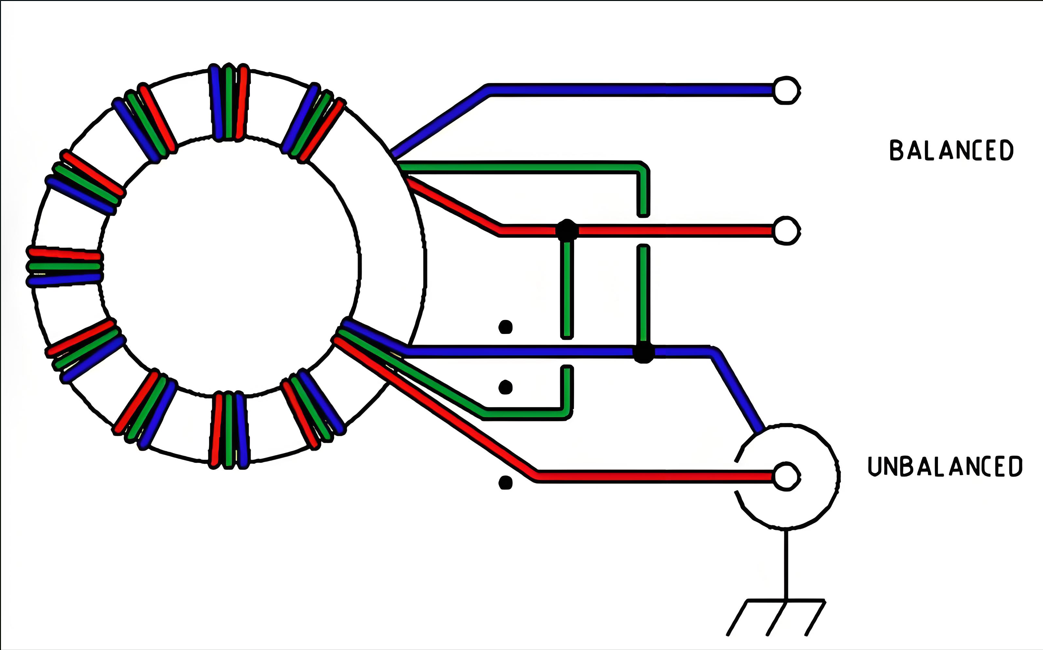
Core Functions and Applications of Baluns in PCB Boards
Baluns play multiple roles in PCB design, including signal conversion, impedance matching, and common-mode rejection. For instance, in high-speed ADC acquisition boards (such as the FMC129), the Balun converts single-ended analog inputs into differential signals for ADC processing, significantly improving signal-to-noise ratio and noise immunity. According to data from Marki Microwave, their surface-mount Baluns cover a bandwidth from 500 kHz to 20 GHz, making them suitable for various high-frequency applications. In practical PCBA assembly, Balun integration requires careful consideration of layout density to avoid signal crosstalk and ensure optimal PCB performance.
Key Elements of Vibration Simulation Analysis
Through CAE simulation, engineers can predict the stress distribution on Balun solder joints under vibration conditions. Typical simulation models include finite element analysis (FEA), which calculates the mechanical stress experienced by solder joints. Per the IPC-6012 standard, the minimum tensile strength of solder joints should not be less than 50 MPa to prevent failure under vibration. Simulation results guide design optimizations, such as adjusting pad sizes or adding local supports, thereby reducing reliance on silicone adhesive dotting and enhancing the overall reliability of PCBA products.
Performance Considerations and Design Recommendations
When selecting a Balun, key parameters to consider include bandwidth, balance performance, and package type. For example, amplitude balance should be maintained within ±0.5 dB, and phase balance within ±5 degrees, to preserve differential signal quality. In high-vibration environments, it is advisable to prioritize surface-mount technology (SMT) packaged Baluns and optimize layouts based on simulation data. If you require custom PCB design or a reliable PCBA supplier, contact us for detailed quotes and technical support to ensure your project achieves peak performance and durability.
Conclusion
Vibration simulation analysis enables PCB designers to effectively assess Balun solder joint reliability, overcoming the limitations of traditional processes. By integrating authoritative standards and data-driven methods, board durability in harsh environments can be significantly enhanced. Consult a professional PCBA supplier today to safeguard your next high-frequency application.