

The relentless surge in AI computing demand is driving transformative changes in server architecture. According to TrendForce research, PCBs in AI servers have evolved from basic circuit carriers into critical hubs for unleashing computational power, marking the advent of the "Three-High Era" characterized by high frequency, high power consumption, and high density. This shift presents unprecedented challenges for PCB materials, manufacturing processes, and the global supply chain, directly impacting PCB and PCBA innovation.
High-Frequency Driving Material Innovations
To ensure optimal signal integrity (SI), the Rubin platform implements a cable-less interconnect design, fully adopting M8U (Switch Tray) and M9 (Midplane) grade low-dielectric materials. The Midplane achieves a remarkable layer count of 104, with HDI boards reaching 24 layers, boosting the PCB value per server by over 200% compared to previous generations (Source: TrendForce). In compliance with IPC-6012EM standards, high-layer-count HDI designs must maintain a hole wall copper thickness of ≥25μm to guarantee stable high-frequency signal transmission, a key consideration for advanced PCB fabrication.
Co-Design for Power and Thermal Management
Under high-power scenarios, effective PCB thermal management becomes paramount. Japan’s Nittobo has invested 15 billion yen to expand production of T-glass fiber cloth, which features a coefficient of thermal expansion (CTE) below 3.5 ppm/°C and an elastic modulus exceeding 90 GPa, substantially reducing deformation risks in ABF substrates under high temperatures (Source: Nittobo technical whitepaper). Furthermore, low-roughness HVLP4 copper foil must exhibit a dielectric loss (Df) under 0.003 to minimize signal attenuation, supporting reliable PCBA performance in demanding environments.
Supply Chain Dynamics: Opportunities and Challenges
Upstream material technological barriers are reshaping the PCB industry landscape. If Taiwanese enterprises can achieve breakthroughs in high-layer HDI and Low-DK2 material technologies, they are poised to lead during the 2026 AI server growth cycle. Presently, HVLP4 copper foil supply remains constrained, prompting buyers to secure long-term agreements with trusted PCB suppliers to mitigate procurement delays.
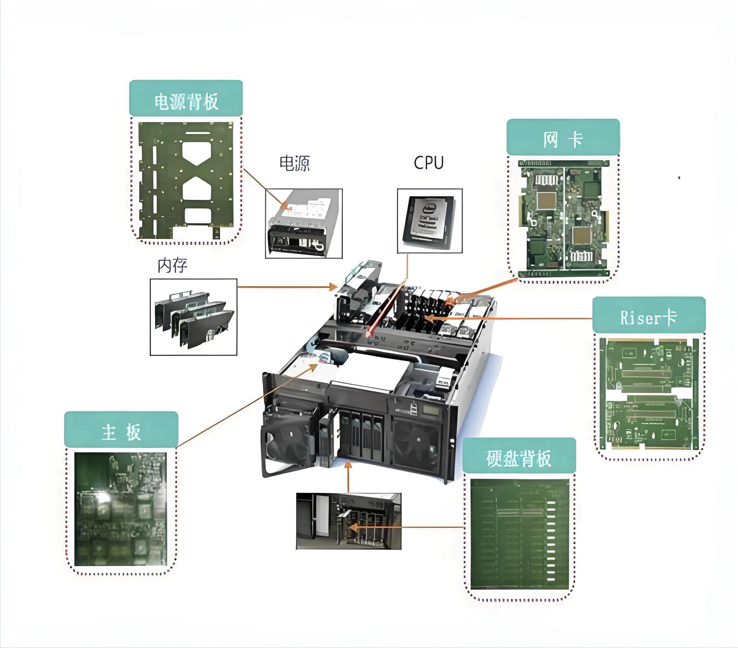
In response to the "Three-High" trend, electronics manufacturers must concurrently advance their PCBA processes—such as incorporating via filling plating and laser direct imaging (LDI) to enhance yield rates. For projects involving high-frequency, high-speed PCB design, partnering with an experienced UGPCB supplier for customized solutions is recommended to navigate technological evolution and reduce iteration risks.